
Wood Decks in Olathe, KS

Real wood still earns its place in a lot of backyards. Wood decks in Olathe feel great underfoot and can cost less up front, but our winters, wet springs, and clay soil are hard on them. The wood you pick and the frame under it decide how long yours lasts. We build in treated pine, cedar, hardwood, and composite, so the advice you get isn’t tied to one material.

Since 1997 · 5.0 rating from 270+ Google reviews · BBB A+ accredited since 2009 · Class A licensed in Johnson County · 4,000+ outdoor structures built · 5-year craftsmanship and 5-year wood rot warranty

What Olathe Asks of a Wood Deck

Olathe’s own building code spells out the problem. Its climate table rates our weathering as “severe” and marks the area for termite damage. Wood here has to handle decay, insects, and freeze-thaw, year after year.

  • Freeze and thaw. Water soaks into end grain and fastener holes, freezes, and opens checks and splits. It’s also why fasteners back out by spring.
  • Wet springs. We average about 37 inches of rain a year, with May usually the wettest month. Boards that never fully dry cup and grow mildew.
  • Clay that moves. Olathe sits on heavy clay soils that swell when wet and shrink when dry. Piers have to go at least 36 inches deep, below the frost line.
  • Decks at replacement age. Olathe roughly doubled in size between 1990 and 2020. Many treated-pine decks from that boom now have cupped boards, soft stair treads, and ledgers that were never flashed.
  • HOA finish rules. Some associations care how a wood deck looks over time. Homestead Creek, for example, requires written approval for decks and their coverings, and at least two coats of paint or stain on exterior wood.

None of this rules out wood. It just means the species, the fasteners, and the frame matter more here than in a milder climate.

Wood Decks in Olathe: Treated, Cedar or Hardwood?

Three woods cover nearly every wood deck we build. Here’s how they compare.

Pressure-treated pine Western red cedar Tropical hardwood (ipe, cumaru)
Hardness (Janka) About 690 About 350 Ipe about 3,500 to 3,700; cumaru about 3,300
How it resists rot Chemical treatment Natural oils in the heartwood Dense, naturally very decay resistant
Look over time Green-tan, takes stain well Warm red-brown, weathers to silver gray Deep brown, weathers to silver gray
Upkeep Stain or seal regularly Finish regularly to keep the color Oil yearly to keep the color, or let it go gray
Fasteners Hot-dip galvanized or stainless Stainless Stainless, every hole pre-drilled
Watch-outs Shrinks as it dries; can warp and check Soft, dents easily; prices up after lumber tariffs Long lead times; costs more to buy and install

Pressure Treated Decking

Treated southern pine is the most common wood deck in Olathe, and the right treatment level matters more than most people know.

  • Ground-contact rated where it counts. The wood treatment industry’s standard (AWPA) calls for ground-contact lumber on posts and ledgers, and on any framing that’s close to the ground, hard to replace, or sits where leaves collect.
  • Installed tight. Treated boards arrive wet and shrink as they dry, so we lay them tight and let them open to about 1/4 to 3/8 inch.
  • Stain when it’s ready. Sprinkle water on the boards. If it soaks in, the wood is ready for stain, often within about six weeks.
  • Cedar-tone treated lumber is also available: treated pine with a brown pigment, for a cedar look at a treated-pine price point.

Cedar Decking

Western red cedar is lighter, more stable, and better looking than treated pine, and it smells great on a hot day.

  • Heartwood only. The decay resistance is in the heartwood. Sapwood rots like any untreated wood, so we check grade and heartwood content when boards arrive.
  • Stainless fasteners. Cedar’s natural oils react with electroplated and copper fasteners and leave dark streaks.
  • Finish all six sides before the boards go down, so ends and undersides don’t soak up water.
  • Treated framing underneath. Cedar is soft and spans less than pine, so most cedar decks we build sit on a treated pine frame.

Hardwood Decking

Ipe and cumaru are about ten times harder than cedar, and among the most rot-resistant decking you can buy. We go deeper on ipe on our Shawnee ipe decks page. Two things to know before you choose it:

  • Supply has changed. Ipe and cumaru were added to CITES Appendix II on November 25, 2024. They aren’t banned, but every shipment needs export permits, which means longer lead times and higher prices.
  • It must be installed right. Every board is pre-drilled, cut ends are sealed, fasteners are stainless, and the deck needs open airflow underneath.

The Frame Under Any Wood Deck

This is the half you never see, and it’s where most failing Olathe decks fail.

  • Piers at least 36 inches deep, sized to the deck area each one carries, per the Johnson County deck guide.
  • Joist spacing matched to the boards: 16 inches on center for 5/4 boards (12 inches on a diagonal), 24 inches for 2x boards.
  • A treated 2×8 ledger, lagged or bolted into the house rim, never through brick, stone or stucco veneer, with flashing at least 6 inches up behind the siding.
  • Hot-dip galvanized or stainless hardware. Electroplated fasteners aren’t approved with treated lumber in Johnson County.

See our framing options.

When Wood Is the Wrong Fit

We’ll tell you if wood isn’t right for your yard. It’s usually a poor choice on a heavily shaded lot where boards never dry, on a very tall deck where refinishing means scaffolding, or for anyone who doesn’t want a stain day every couple of years. In those cases, look at maintenance free decking in Olathe.

What We Check Before We Build Your Wood Deck

Dan Milford has built wood decks across Johnson County since 1997. At the design visit, he walks your yard and your old deck, if there is one, and checks:

  • Whether the old frame can stay. Ledger fastening and flashing, post size, pier depth, and any soft joists. On most older Olathe decks, a full replacement is the honest answer.
  • Shade and airflow. How much sun the boards get, and whether air can move under the deck so wood can dry.
  • Height and stairs. How far the door sits above grade, and where a stair run can land.
  • Drainage. Downspouts, grade, and where water goes under the deck.
  • Your HOA’s rules. Approved materials, stain colors, and the review timeline.
  • Your upkeep budget. How often you’re willing to stain, which narrows the species fast.

What a Wood Deck Costs in Olathe

We price wood decks per project, after the design visit. Treated pine, cedar, and hardwood land at very different points, and lumber prices have moved a lot since the 2025 tariffs on Canadian lumber, and most western red cedar comes from Canada.

For comparison, our composite decks start at $20,000, with most between $25,000 and $40,000, or about $100 to $160 per square foot. A wood deck needs the same piers, frame, permit, and inspections. The boards, railing, and finish are what change the price.

What moves the number on any deck:

  • Height off the ground and stair runs
  • Size and layout, including multi-level designs
  • Diagonal or patterned boards
  • Railing style
  • Lighting
  • Tearing out and replacing an old frame

See all our ranges on the pricing page.

What's Covered on a Wood Deck

Wood is where our wood rot warranty earns its name.

  • Rot and our workmanship. Our 5-year wood rot and 5-year craftsmanship warranty covers the structure from the concrete piers to the post caps.
  • What wood does on its own. Treated lumber shrinks, cups, and checks as it dries. That’s the nature of the material, not a defect, so that movement isn’t covered. Installing boards tight and framing in ground-contact lumber keeps it to a minimum.
  • Metal railing, if you choose it. Westbury aluminum carries a lifetime limited warranty. If you mix in Deckorators composite boards, they carry a 25-year warranty.

You get a warranty certificate at closeout with your name, address, and project date, and we keep a copy. Read the full warranty.

Olathe Permits for a Wood Deck

The Johnson County deck guide that Olathe uses says a permit is needed before you build, alter or replace a deck. The only exemption is a small detached deck: 200 square feet or less, no more than 30 inches high, and not serving a required exit door. We take care of the whole process.

  • Plans: a site plan to scale, plus a deck plan with pier, post, beam, and joist sizes and the lumber type.
  • Filing: through the city’s online Customer Self-Service portal. Standard review takes about 5 business days, and smaller qualifying projects can get 1-day express review.
  • Inspections: pier holes before concrete, framing if it will be covered, and a final.
  • Fees: recent Olathe permits for decks without roofs ran roughly $80 to $225.
  • Licensing: Olathe requires a Johnson County contractor license for permitted work. We hold Class A, the county’s top license.
  • Safety basics the inspector checks: 36-inch guards on decks more than 30 inches up, stair risers no taller than 7-3/4 inches, treads at least 10 inches deep, and a light at the deck and stairs.

If you’re in an HOA, we prepare the drawings and the stain or material samples your committee wants to see, and wait for approval before ordering lumber.

Why Olathe Homeowners Choose DW as Their Wood Deck Builder

  • We know our woods. We build in treated pine, cedar, ipe, and composite, so you hear the honest trade-offs, not a pitch for whatever’s in stock.
  • We check the lumber, not just the drawing. Grade, heartwood content, and ground-contact ratings get checked when boards arrive.
  • The right fasteners every time. Hot-dip galvanized or stainless, matched to the species, so nothing streaks or corrodes.
  • Dan on every design. He has led DW Elite Decks since 1997 and oversees each project personally.
  • Our own crews. Vetted, trained, managed, and supervised by DW, building only for us, year-round.
  • Credentials you can check. Class A licensed in Johnson County, BBB A+ since 2009, Westbury Certified Master Pro, and Deckorators Certified Pro Elite.
  • Proven at scale. 4,000+ outdoor structures, with a 5.0 rating from 270+ Google reviews.

How We Build Your Wood Deck

Share Your Vision - Image

1. Share Your Vision

Tell us how you picture the deck and how much upkeep you’re willing to take on. Dan comes out to look at the yard, the old deck, and how much sun the boards will get.

Design & Plan - Image

2. Design & Plan

You choose the species and grade, and get an itemized bid with framing, fasteners, and finish spelled out. We file the Olathe permit and order lumber only after your HOA signs off.

Build & Enjoy - Image

3. Build & Enjoy

We frame with ground-contact lumber where it counts, set boards with the right gaps and fasteners, and pass every inspection. Before we leave, we walk the deck with you, show you when and how to stain or oil it, and hand over your warranty certificate.

What Pairs Well With a Wood Deck

  • Cedar pergolas. A cedar pergola over part of a cedar deck ties the whole space together. Olathe requires a separate roof structure permit for pergolas, which we file with the deck. Cedar pergolas start at $15,000. See pergolas.
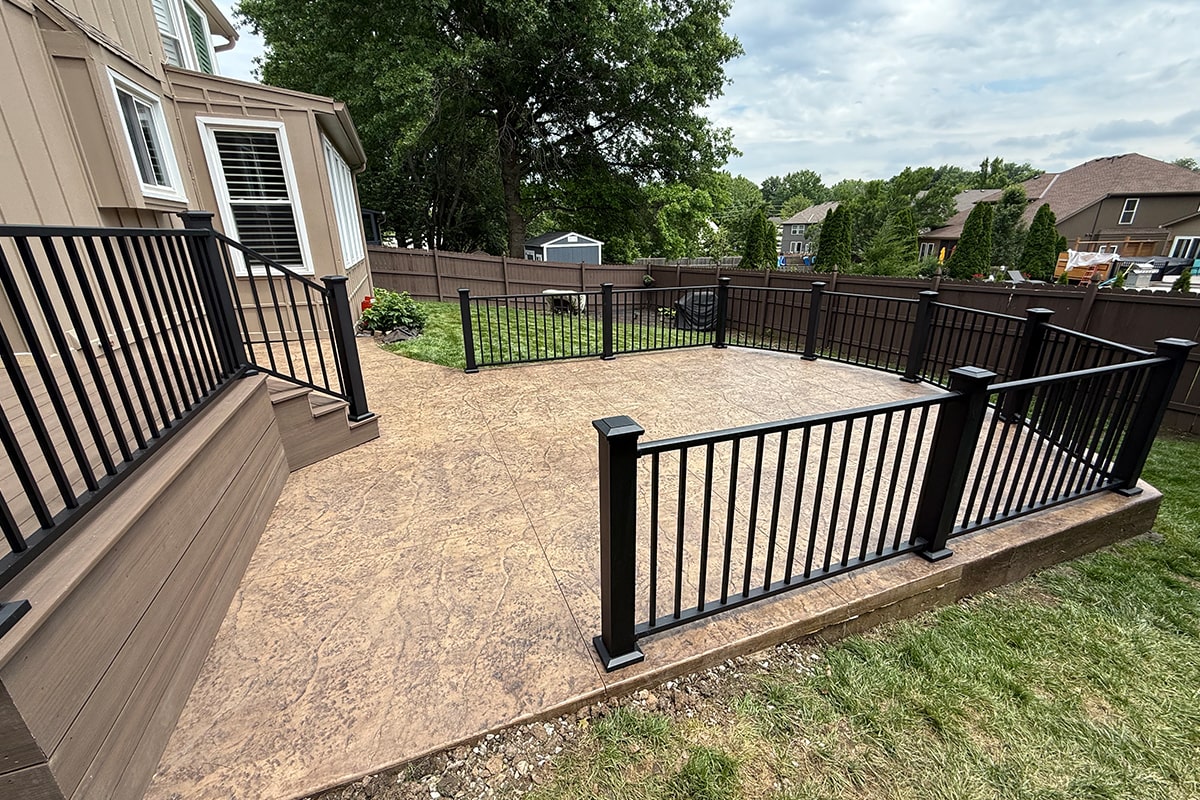
  • Railings. Wood rails match a wood deck but need the same upkeep. Westbury aluminum railing never needs paint, and it pairs well with cedar or hardwood. See Westbury railing.
  • Lighting. Required at the deck and stairs. Low-voltage lights are easiest to run before the boards go down. See DekPro lighting.
  • Fire features. Olathe’s fire code keeps open wood fires 25 feet from structures, and a wood deck is a structure. Put the fire pit on a patio below the deck instead.
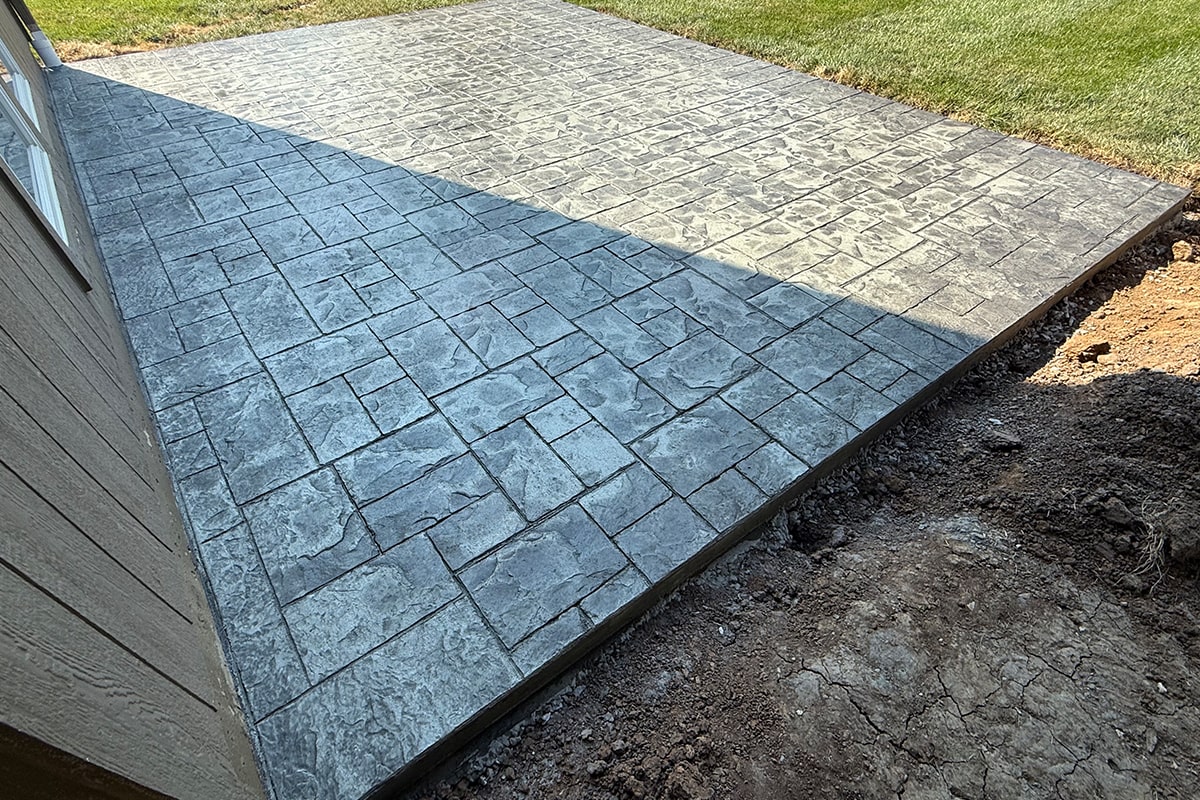
  • Concrete patio. A stamped patio at the foot of the stairs gives you room for that fire pit and the grill. Stamped, colored patios start at $12,000. See stamped concrete.

Frequently Asked Questions

What is the best wood for a deck in Olathe?

For most budgets, it’s a treated pine frame with either treated or cedar boards. Cedar looks and feels better and moves less, while treated pine costs less. Ipe is the most durable, if you can wait on supply.

Is cedar better than pressure-treated wood?

Cedar is more stable and better looking, and its heartwood resists rot without chemicals. Treated pine is harder, cheaper, and better for framing and ground contact. That’s why many decks use both.

How soon can I stain a new pressure-treated deck?

Once it passes the water test, sprinkle water on the boards, and if it soaks in, the wood is dry enough to stain, often within about six weeks.

Is a wood deck cheaper than composite?

Usually up front, especially in treated pine. Over time, regular staining or sealing adds cost and weekends that composite doesn’t need.

Can I put new wood boards on my old deck frame?

Sometimes. We check the ledger, posts, piers, and joists first. On older Olathe decks, the frame is often the part that needs replacing.

Do I need a permit to replace my deck in Olathe?

Almost always. Olathe requires a permit to build, alter, or replace a deck unless it’s small, low, and detached. We prepare the plans and handle the inspections.

Ready to Build With Real Wood?

Not sure yet whether it’s treated pine, cedar, or ipe? That’s what the design visit is for. Dan will look at your yard, talk through cost and upkeep for each, and leave you with an itemized bid. Request your free bid or call (913) 782-7575 to get started on wood decks in Olathe.

OUR ACCOLADES

Award Symbol

Granted a Class A building license for operation in Johnson County, Kansas. This is the top license type for any contractor.

Award Symbol

Deckorators chose DW Elite Decks as its First Certified Pro Spotlight Feature.

Award Symbol

Awarded the coveted Angie's List Super Service Award (many times), which is only given to the top 5% of all Kansas City deck builders.

Award Symbol

Nationally recognized by Rich Noonan, the Eight Time Emmy Award-Winning Reporter for Fox News!

Award Symbol

Westbury Certified Master Pro. Beacon of distinction as the bar is set high to earn this coveted status.


Our Service Image

Ensuring Quality and Compliance

At DW Elite Decks, we pride ourselves on delivering craftsmanship that meets and exceeds industry standards. As Kansas City’s premier custom deck builder since 1997, we ensure every project is executed with proper permits and passes final inspections, guaranteeing code compliance and long-term safety.

Our Service Image

Accolades