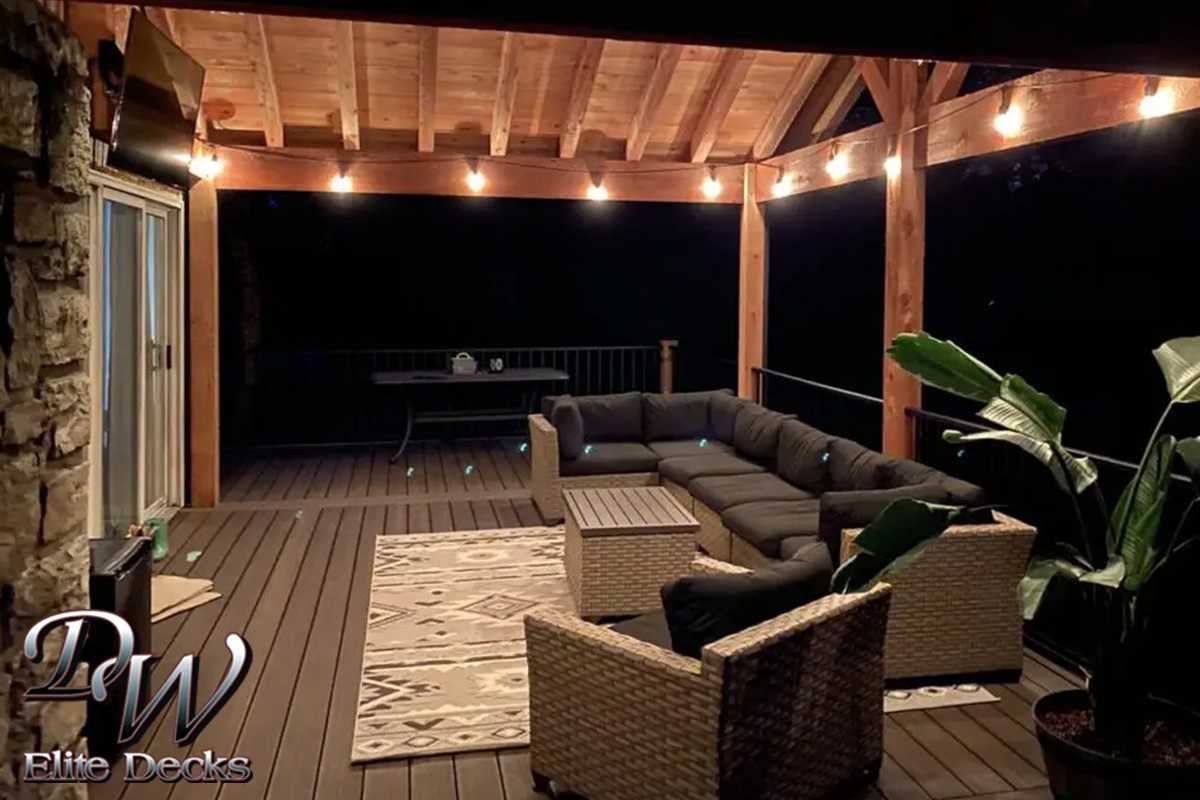
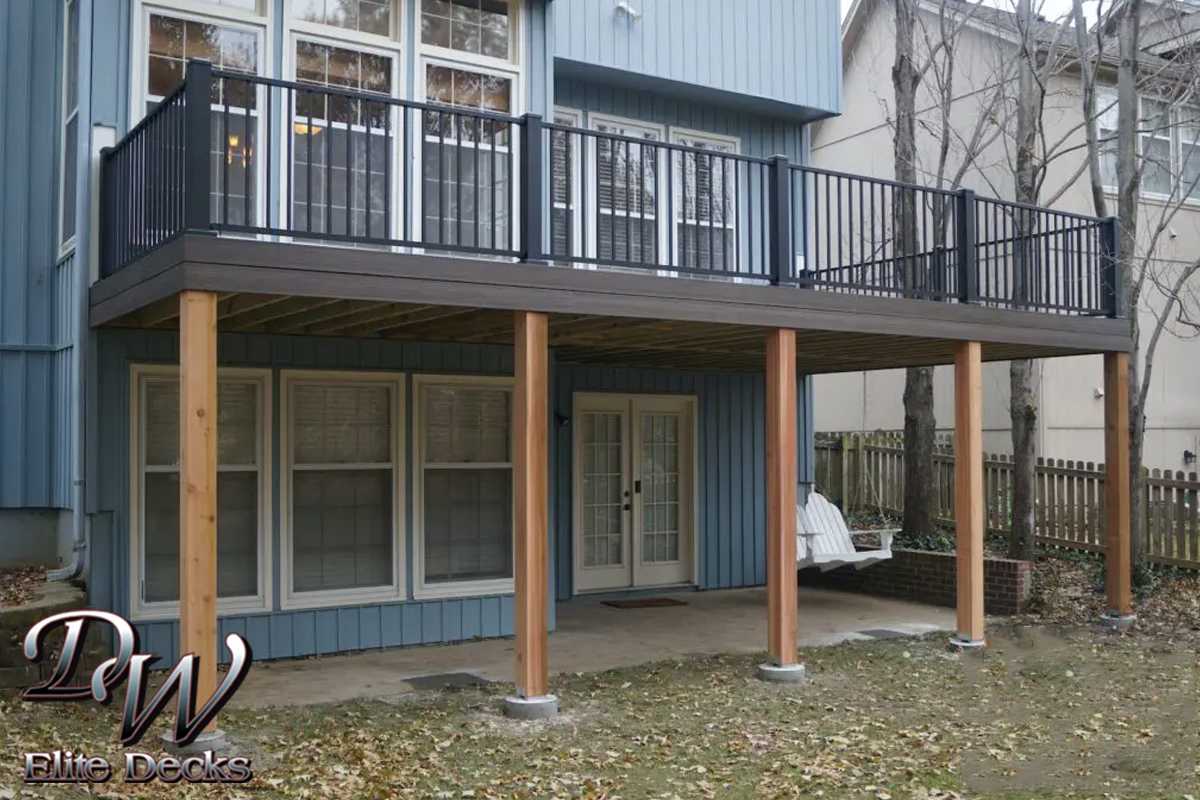
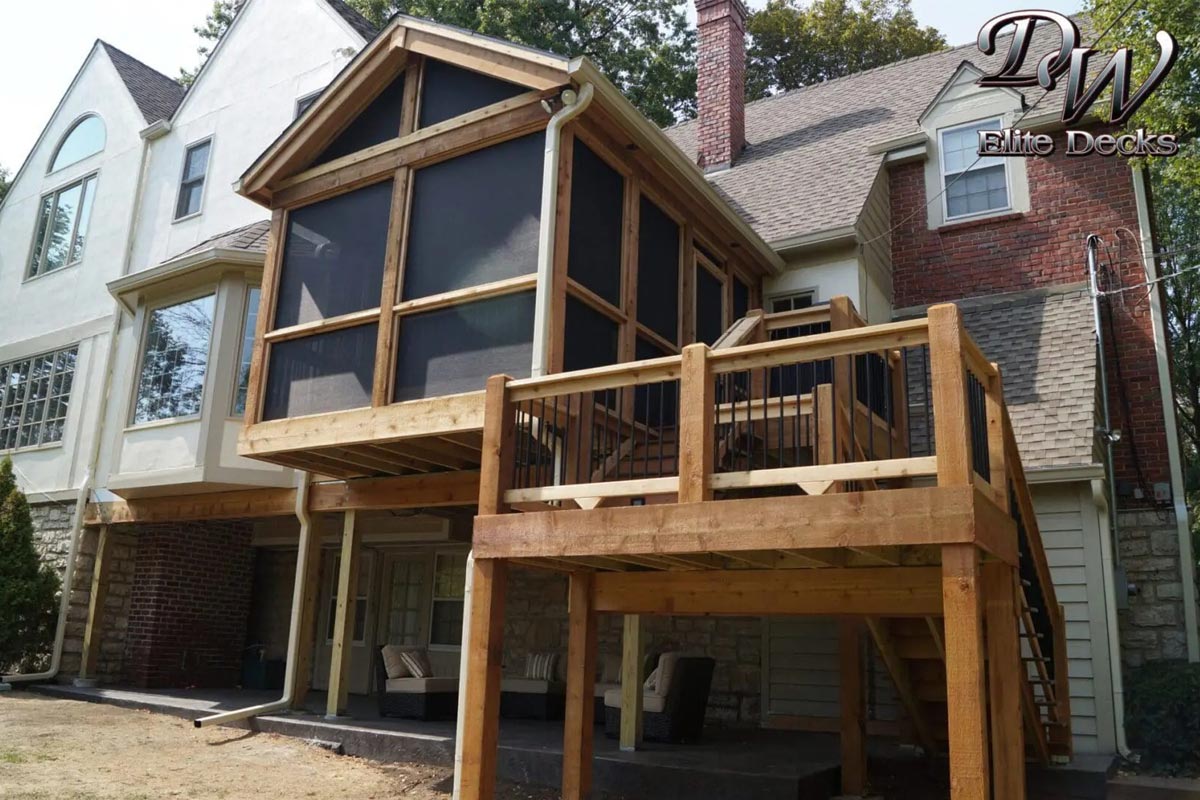
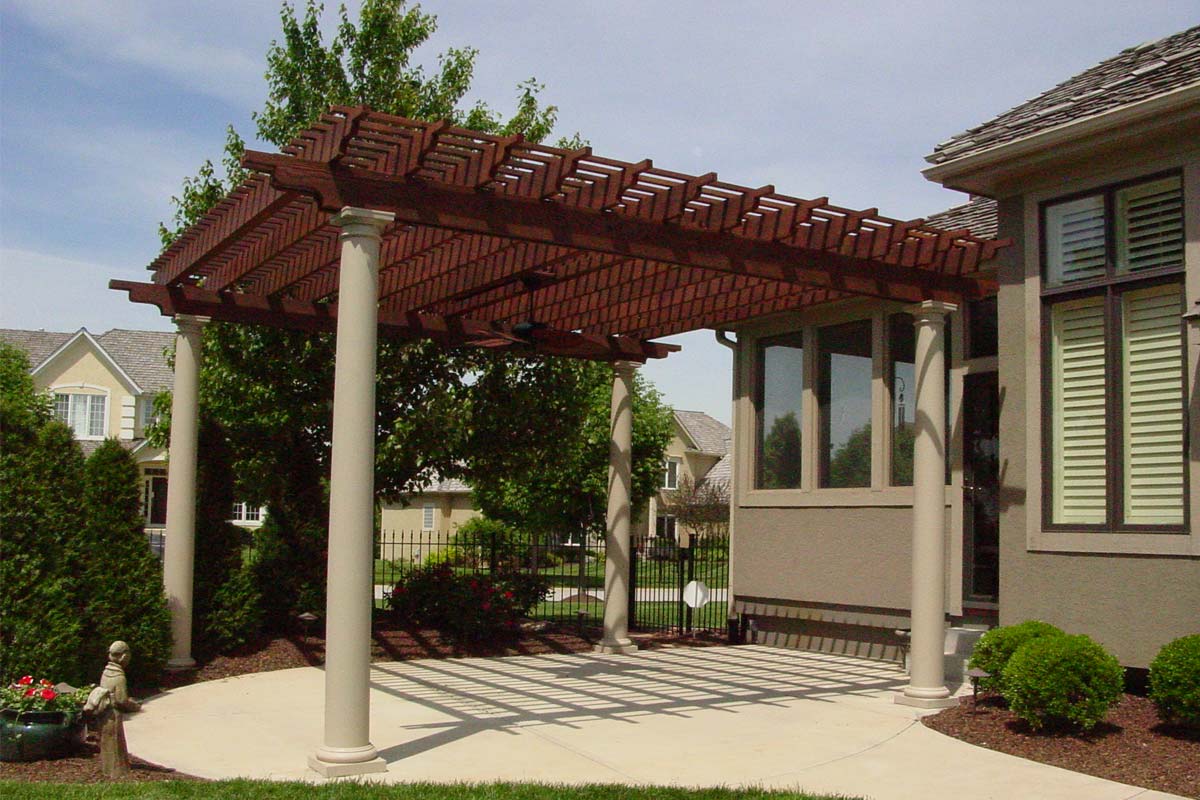

There is nothing quite like the feel of real wood underfoot. If you have been pricing out wood decks in Kansas City, you have probably noticed the same thing our customers do: two bids for what looks like the same deck can land thousands of dollars apart. The difference is almost always in the parts you never see once the boards go down. Footing depth. Ledger flashing. Joist spacing. Fastener choice. DW Elite Decks has designed and built custom outdoor living spaces across the metro since 1997, and we build the hidden half with the same care we give the surface.
5.0 ⭐ rating with 240+ Google reviews, BBB A+ accredited since 2009, licensed Class A and residential contractor, Deckorators Certified Pro Spotlight builder, multi-year Angi Super Service and Best of Houzz award winner.
Composite gets most of the attention these days, and for good reason. But plenty of homeowners across the metro still want real lumber, and they usually want it for one of these reasons:
We will also tell you when wood is not the right call. If you travel constantly, hate ladders, or want to stop thinking about your deck the day it is finished, we will point you toward our composite decks instead. We would rather lose a wood deck sale than hand you a maintenance schedule you will resent in three summers.
The best wood decking for your project depends on your budget, your sun exposure, and how much upkeep you actually want to do. Here is how the common options compare in our market.
The workhorse. It is treated to resist rot, decay, and termite damage; it is widely available, and it is the most budget-friendly way to get a real wood deck. Expect to clean and re-stain it on a regular cycle to keep it from graying and checking. Pressure-treated lumber is also the standard structural material underneath most decks in this region, wood surface or not.
Cedar carries natural oils that give it built-in resistance to rot and insects with no chemical treatment. It takes stain beautifully, it is dimensionally stable, and it tends to run cooler underfoot than a dark board on a July afternoon. It costs more than pressure-treated pine. In some cases it now costs more than composite, and we will show you those numbers side by side rather than let you find out later.
Your decking is the part you see. Your framing is the part that determines whether the deck is still flat in year fifteen. We install several deck framing options, from natural pressure-treated lumber to PWT-treated LVL, TrueFrame joists, and Fortress Evolution steel. Plenty of homeowners choose a wood walking surface over an upgraded frame, and that combination gets you the look you want with a structure that will not twist and cup underneath it.
Not sure what you are looking at? Come see and touch the samples at our Olathe showroom, open by appointment.
Our climate is genuinely hard on exterior wood, and it is hard in more than one direction. That matters more than most bids let on.
We get roughly 40 inches of precipitation a year. Rain arrives heaviest in spring, sits in the gaps between boards, and soaks anything that traps debris. Drainage detailing and proper board gapping are not optional here.
July afternoons push near 90 degrees with real humidity. Wood swells, then shrinks again during dry late-summer stretches. That cycle is what loosens fasteners and cups boards on decks that were built tight.
January nights drop into the low 20s, with occasional deep cold snaps. Water that got into a checked board or an unflashed ledger freezes and expands, and the damage compounds every winter.
The ground under your yard moves. Most of the metro sits on expansive clay that swells when saturated and shrinks when it dries out. That seasonal movement is the reason footing depth is not a corner worth cutting. Deck footings in this area are set below the frost line, which local building departments treat as 36 inches, so the structure is anchored beneath the zone where the soil is doing the most moving.
What we do about it: correct footing depth and diameter, properly flashed ledger connections, joist protection where water collects, gapping sized for the material and the season we are installing in, and grading and drainage that carry water away from the structure rather than under it. If you want the maintenance side, our team covers it in Deck Maintenance 101 and Weatherproofing Your Deck or Patio.
When you are comparing one wood decking company against another, most of what you can actually verify comes down to four things: who does the work, who is accountable, what happens when something goes wrong, and whether the permit gets pulled.
We come to you, look at the grade, the door heights, the drainage, and the sun, and talk through how you actually plan to use the space.
We prepare the drawings and handle the submittal with your jurisdiction, whether that is the Kansas City Permits Division or a Johnson County city.
We take the project through final inspection, then walk it with you and address details before we call it done.
We publish real starting prices for our most-requested builds on our pricing page, and we would rather quote your actual yard than post a per-square-foot number that will not survive contact with your site conditions.
What moves the number on a wood deck:
DW Elite Decks works out of Olathe and serves Southern Johnson County and the greater Kansas City area, including De Soto, Gardner, Lake Quivira, Leawood, Lenexa, Loch Lloyd, Merriam, Mission, Mission Hills, Olathe, Overland Park, Prairie Village, Roeland Park, Shawnee, Spring Hill, and Southern Kansas City, Missouri.
City pages: Kansas City | Overland Park | Leawood | Lenexa | Olathe | Shawnee
A deck is often the starting point rather than the finish line. Homeowners frequently pair a wood deck with:
Usually yes. In Kansas City, Missouri, platforms and decks that do not exceed 30 inches above grade at any point and are not built over a basement or story below are exempt from a building permit. Johnson County cities set their own thresholds, and we confirm the requirement for your address before we submit.
With consistent cleaning, sealing, and prompt repairs, a well-built wood deck commonly lasts 15 to 20 years or more before boards need replacing. Skipped maintenance shortens that considerably in our freeze-and-thaw climate. The framing underneath often outlasts the walking surface, especially if you upgrade it.
Pressure-treated Southern Yellow Pine gives you the most deck for the money and holds up well when it is maintained. Western red cedar costs more and offers natural rot resistance with a finer appearance. We walk you through both, plus composite, so you can compare honestly.
Wood almost always costs less upfront. Over 15 to 20 years, the maintenance spend narrows the gap, and premium cedar can end up costing more than mid-grade composite from the start. We show you both numbers so you can decide with the full picture.
Spring and fall bring the most workable conditions, and those are also our busiest windows. If you want to be using your deck by Memorial Day, start the conversation in late winter so design and permitting are done before the season fills up.
Come see materials in person at our Olathe showroom, or have us out to your yard for a free consultation and a written, itemized bid. Call (913) 782-7575 or request a bid online, and we will walk your site, compare your material options honestly, and put a real number in front of you, because the best wood decks in Kansas City start with an honest plan and not a guess.

Granted a Class A building license for operation in Johnson County, Kansas. This is the top license type for any contractor.

Deckorators chose DW Elite Decks as its First Certified Pro Spotlight Feature.

Awarded the coveted Angie's List Super Service Award (many times), which is only given to the top 5% of all Kansas City deck builders.

Nationally recognized by Rich Noonan, the Eight Time Emmy Award-Winning Reporter for Fox News!

Westbury Certified Master Pro. Beacon of distinction as the bar is set high to earn this coveted status.

At DW Elite Decks, we pride ourselves on delivering craftsmanship that meets and exceeds industry standards. As Kansas City’s premier custom deck builder since 1997, we ensure every project is executed with proper permits and passes final inspections, guaranteeing code compliance and long-term safety.