



Your deck should fit the way you live. Some homeowners want a peaceful retreat for relaxing, while others prefer a space for hosting family and friends. The right design adds comfort, style, and long-term value to your home. Understanding the most common types of decks for houses helps you plan a project that fits your property and your goals.
The Most Popular Deck Designs Homeowners Choose Today
Multi-Level Decks
A multi-level deck features two or more platforms connected by short stairs or landings. This type works beautifully on sloped lots or homes with walk-out basements. Each level serves a purpose: grilling above, dining mid-level, and relaxing around a fire pit below. The structure requires precise framing, strong footings, and good drainage to ensure stability.
Pros:
- Maximizes space on uneven terrain.
- Creates multiple outdoor zones.
- Offers distinct areas for dining, lounging, or entertaining.
Cons:
- More complex framing increases cost.
- Multiple steps may reduce accessibility for kids or older guests.
Pro Tip: Integrate stair and perimeter lighting for both safety and dramatic evening aesthetics.
Wraparound Decks
Wraparound decks extend along two or more sides of the house. They connect living areas and allow sunlight and shade access throughout the day. This design works well for homes on spacious lots with scenic surroundings or open lawns.
Pros:
- Expands outdoor space with multiple access points.
- Ideal for panoramic or backyard views.
- Allows flexible furniture layouts for different uses.
Cons:
- Requires more material and labor than a single-face deck.
- Can feel tight on smaller lots or close property lines.
Key Takeaway: A wraparound deck creates 360-degree outdoor living and highlights architectural features on traditional or farmhouse-style homes.
Second-Story Decks
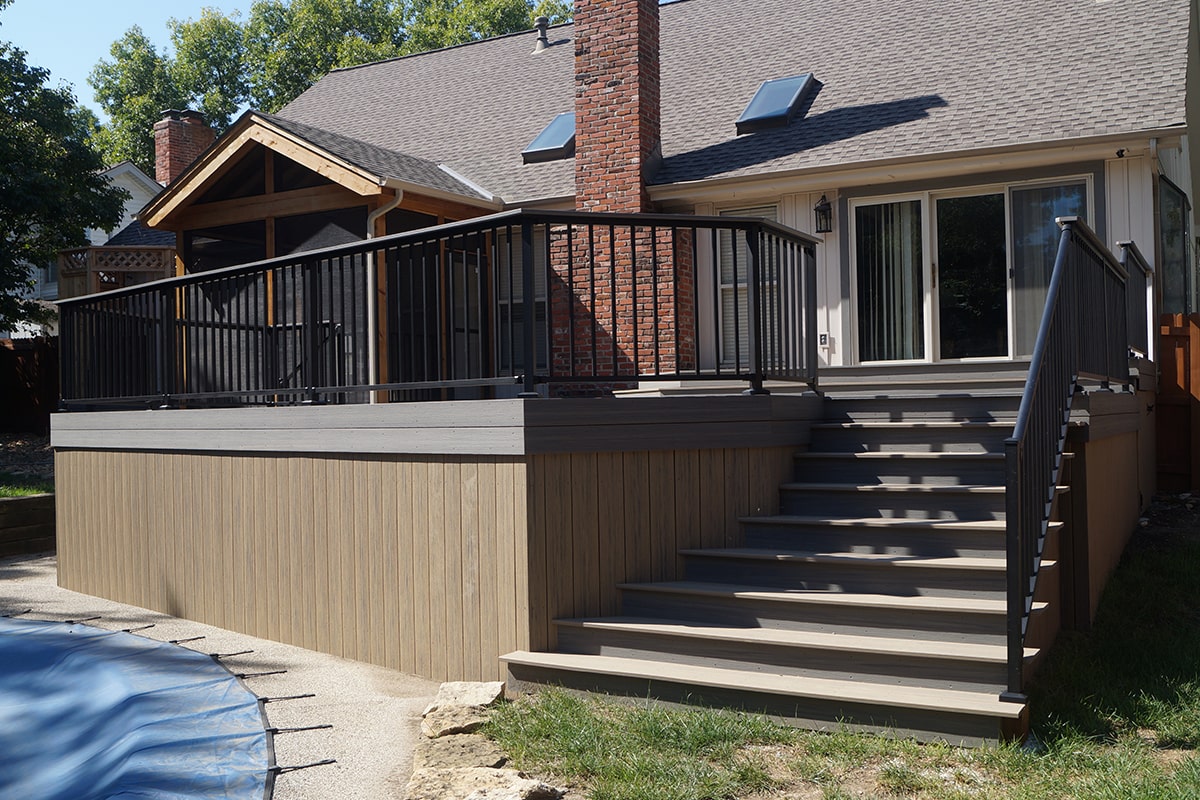
Second-story decks connect to upper living levels, providing raised outdoor areas without taking yard space. Strong beams and posts support the elevated platform, and an under-deck ceiling system can create dry storage or shaded space below.
Pros:
- Preserves lawn area.
- Adds shade to patios or lower-level areas.
- Enhances privacy and views.
Cons:
- Requires detailed structural engineering.
- Longer stairs can limit convenience for frequent use.
Pro Tip: Use composite decking and aluminum railings to reduce maintenance and increase longevity.
Double-Decker Decks
A double-decker deck stacks two complete decks vertically. The upper level is ideal for dining and entertaining, while the lower level serves as a sheltered retreat. This design is often paired with under-deck drainage systems to keep the lower area dry.
Pros:
- Doubles outdoor living capacity.
- Provides natural weather protection.
- Great for families who host gatherings year-round.
Cons:
- Higher material and labor costs.
- Requires strong support posts and deep footings.
Key Takeaway: A double-decker deck offers two functional environments in one footprint for maximum versatility.
Curved Decks
Curved decks use bendable composite boards or segmented framing to create elegant, rounded edges. This design complements modern homes and landscaped yards where straight lines feel too rigid. The finished shape flows smoothly with gardens, pools, or patios.
Pros:
- Visually distinctive and high-end.
- Enhances flow between the deck and landscaping.
Cons:
- Specialized construction increases cost.
- Limited to flexible composite materials.
Pro Tip: Continuous curved railings highlight the deck’s sculpted design and create a premium look.
Every great deck starts with the right plan. Schedule a design consultation with DW Decks to explore the best layout, materials, and features for your outdoor living space.
Pool and Spa Decks
Pool decks frame pools, spas, or hot tubs to improve safety, comfort, and appearance. These decks require water-resistant materials such as composite or PVC to prevent warping and reduce slip hazards. Proper drainage and nonskid textures are essential to performance.
Pros:
- Enhances pool safety and accessibility.
- Provides lounging and sunbathing areas.
- Creates a cohesive backyard design.
Cons:
- Constant exposure to water shortens the lifespan of cheaper materials.
- Needs frequent cleaning to prevent buildup.
Key Takeaway: A well-planned pool deck turns your pool area into a resort-style retreat for daily enjoyment.
Covered Decks
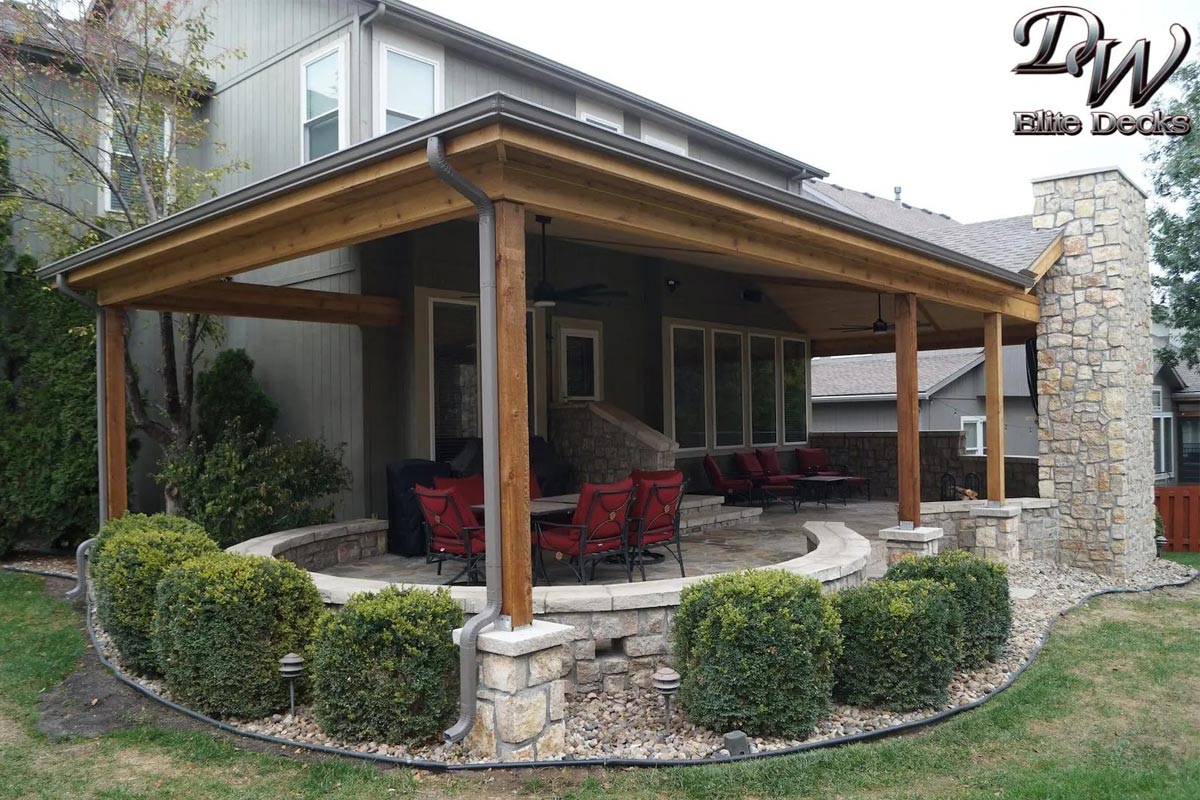
Covered decks include a solid roof, pergola, or pavilion-style frame that protects furniture and flooring from rain and sun. The roof structure extends the usability of the space year-round and adds architectural depth to the home’s exterior.
Pros:
- Offers shade and rain protection.
- Extends deck and furniture lifespan.
- Provides year-round comfort.
Cons:
- Roof framing adds cost and complexity.
- May reduce indoor natural light near adjoining doors or windows.
Pro Tip: Choose roofing and trim materials that match your home for a unified design that looks built-in.
Enclosed Decks
An enclosed deck features screens, vinyl panels, or glass windows to block insects and wind while maintaining natural light. Depending on design, it can function as a screened porch or a four-season sunroom.
Pros:
- Protects against bugs, rain, and debris.
- Extends seasonal usability.
- Adds additional semi-indoor living space.
Cons:
- More costly than open decks.
- Slightly limits airflow.
Key Takeaway: An enclosed deck creates comfort, privacy, and protection, perfect for homeowners who enjoy the outdoors without exposure to weather.
Ground-Level Decks
Ground-level decks sit less than 30 inches above the ground and integrate seamlessly into the landscape. They’re easier to build and typically don’t require railings, making them ideal for budget-friendly projects or compact backyards.
Pros:
- Simple, cost-effective construction.
- Easy access with no stairs.
- Blends smoothly into patios or lawns.
Cons:
- Requires careful moisture control under framing.
- Collects more leaves and debris near the ground.
Pro Tip: Install a vapor barrier or gravel base beneath the deck to prevent wood rot and improve airflow.
Why Work With a Professional Deck Builder
Building a deck requires precise measurements, solid engineering, and code compliance. A professional builder ensures the structure meets safety standards and blends seamlessly with your home’s architecture.
At DW Decks, we design, build, and maintain decks that stand the test of time. From initial consultation to final inspection, our process focuses on craftsmanship, communication, and care for your property.
We handle:
- Structural planning and permits.
- Framing and moisture management.
- Railings, stairs, lighting, and finishing details.
Build a Deck That Fits Your Home and Lifestyle
The right deck brings your home and yard together. Whether you want a simple ground-level patio or a double-decker structure with covered seating, the design you choose defines how you enjoy outdoor living for years to come.
Ready to plan your custom deck? Contact DW Decks today for a free consultation. We’ll help you compare designs, materials, and layouts to build a space you’ll use every season.