
High-Voltage Electrical in Leawood for Decks, Porches and Hot Tubs

Planning a deck, screened porch, or hot tub? The outlets, ceiling fans, infrared heaters, and spa circuits you want all fall under high-voltage electrical in Leawood, and they work best when they are planned into the build instead of added later. DW Elite Decks designs and builds the structure, then brings in licensed high-voltage contractors for the 120V and 240V line voltage work and schedules them around our framing. You get one plan, one schedule, and one team keeping track of it.

5.0 ⭐ rating with 250+ Google reviews, BBB A+ accredited since 2009, licensed Class A and residential contractor, Deckorators Certified Pro Spotlight builder, multi-year Angi Super Service and Best of Houzz award winner.

What High-Voltage Electrical in Leawood Covers

On a deck or porch, high voltage means anything that runs on household current.

To a utility, the term means thousands of volts on power lines. Around a house, it simply means regular 120V and 240V power, as opposed to the 12V system behind low-voltage deck lighting. These are the requests we plan most often:

  • Deck and porch outlets. Code calls for at least one outlet you can reach from a deck attached to the house. We place them where the grill, the string lights, and the pool pump will actually sit, so nothing runs on an extension cord through the back door.
  • Infrared heaters. The Infratech heaters we install run up to 6,000 watts, and most models need a dedicated 240V circuit. The circuit size depends on the model, so we pick the heater before the electrician sizes the wire.
  • Hot tub circuits. The biggest load a deck ever carries. It gets its own section below.
  • Switches where you want them. Fans, heaters, and lights on their own controls inside the door, so you are not walking out in the cold to turn something on.

Covered Deck Ceiling Fan Wiring

On a covered deck or screened porch, a fan needs a fan-rated box and solid blocking above it. Both go in while the ceiling is still open. Adding them after the ceiling is finished means cutting into it, which costs more and rarely looks as clean.

Local Code Details That Change the Wiring Plan

The city runs its own building department and has its own amendments to the code. A few of them land directly on outdoor projects:

  • Almost every electrical change needs a permit. New outlets, new circuits, and moving or replacing wiring all need one. The exemptions are narrow, like plug-in holiday lights or swapping a breaker for one of the same size.
  • Branch circuits must be copper. Local amendments require copper for everyday circuit wiring. Aluminum is allowed only on large service and feeder conductors.
  • Electrical is inspected before framing. The electrical rough-in has to pass before the framing inspection. On a porch or covered deck, every box and wire run has to be in place before the ceiling closes.
  • A rear lighting rule. Homes with rear windows or doors lower than 8 feet need a flood-type rear light with the bulb out of easy reach. If your project touches that wall, we check whether it applies.
  • Homeowners association notice. Associations can ask the city to send them plans for projects that add 10% or more to a home’s square footage. That review window can add 10 working days or more before a permit is issued, so we build it into the schedule.
  • Licensed trades only. Contractors doing electrical work in the city need an active Johnson County contractor license to hold a city business license.

Older Homes and Newer Homes Start in Different Places

Mid-century homes near Lee Boulevard and Leawood Estates. Many date to the late 1940s and 1950s, when nobody planned for a hot tub and two heaters out back. The electrician checks panel capacity before anything else, and a panel or service upgrade gets priced up front, not discovered mid-project. Mature trees and older service lines also mean we find the meter and the incoming service wires first, so the deck is not laid out on top of them.

Newer custom homes in areas like Hallbrook Farms and Mission Reserve. Panel capacity is usually fine. The challenge is distance. A spa or outdoor living area at the back of a large lot can sit a long way from the panel, which can mean heavier wire, trenching, or a subpanel. We map that route before the patio and landscaping go in.

Hot Tub Electrical Hookup on a Deck

A spa is where we see the most surprises, usually because a sales quote left the electrical out. Here is what a code-compliant setup includes:

  • A dedicated circuit, usually 240V, sized from the tub’s installation manual. Some tubs plug in, and others must be hard-wired, so we read the manual at design time, not on install day.
  • A disconnect within sight of the tub and at least 5 feet from it.
  • GFCI protection, plus a general outlet between 6 and 20 feet from the tub. No outlet can sit closer than 6 feet.
  • Nothing overhead. No fan or light directly over the tub unless it is 12 feet above the water. That matters on a covered deck.
  • Bonding of metal parts within reach of the water.

The deck has to carry it too, so the framing under it is designed for a filled tub. We schedule the circuit, inspection, and delivery together, so your spa never waits on power.

Want privacy around the tub? Local rules cap most fences at 4 feet but make an exception near a hot tub, so mention it at the design visit.

Problems We Plan Around

  • A pump or grill running on an extension cord because there is no outdoor outlet where it sits
  • A deck laid out over the meter or right under the incoming service wires
  • A fan box added after the porch ceiling was finished
  • A heater circuit sized before the heater model was chosen
  • A hot tub quote that left out the disconnect, the GFCI protection, and the permit

Why Homeowners Bring Us In Before the Electrician

  • One plan for structure and power. Wire routes, fan boxes, heater mounts, and the spa’s support are drawn together, not patched together later.
  • Rough-in while the framing is open. We schedule the electrician into our build, so wiring runs through the framing instead of along the outside of it.
  • Permits and inspections coordinated. We pull the building permit and line up the electrical inspection with the licensed electrician on your project.
  • Credentials you can check. Class A building license in Johnson County, BBB A+ accredited since 2009, and a 5.0 rating across 250+ Google reviews.
  • Owner involved. Founder Dan Milford personally oversees projects from bid to walkthrough.
  • A warranty on what we build. Our structures carry a 5-year craftsmanship and 5-year wood rot warranty.
  • See it before you choose. Visit our Olathe showroom by appointment to look at materials up close.

One client who added a screened composite deck and a hot tub said in her Google review that we handled the permits and worked with the electrical and hot tub contractors for her. That is the job: you deal with one team, and we keep the trades lined up.

How the Process Works

What High Voltage Electrical in Leawood KS Covers

1. Walk the Site and Find the Power

We locate the panel, meter, and service line, then talk through where the spa, fans, heaters, and outlets will go and how you use the space.

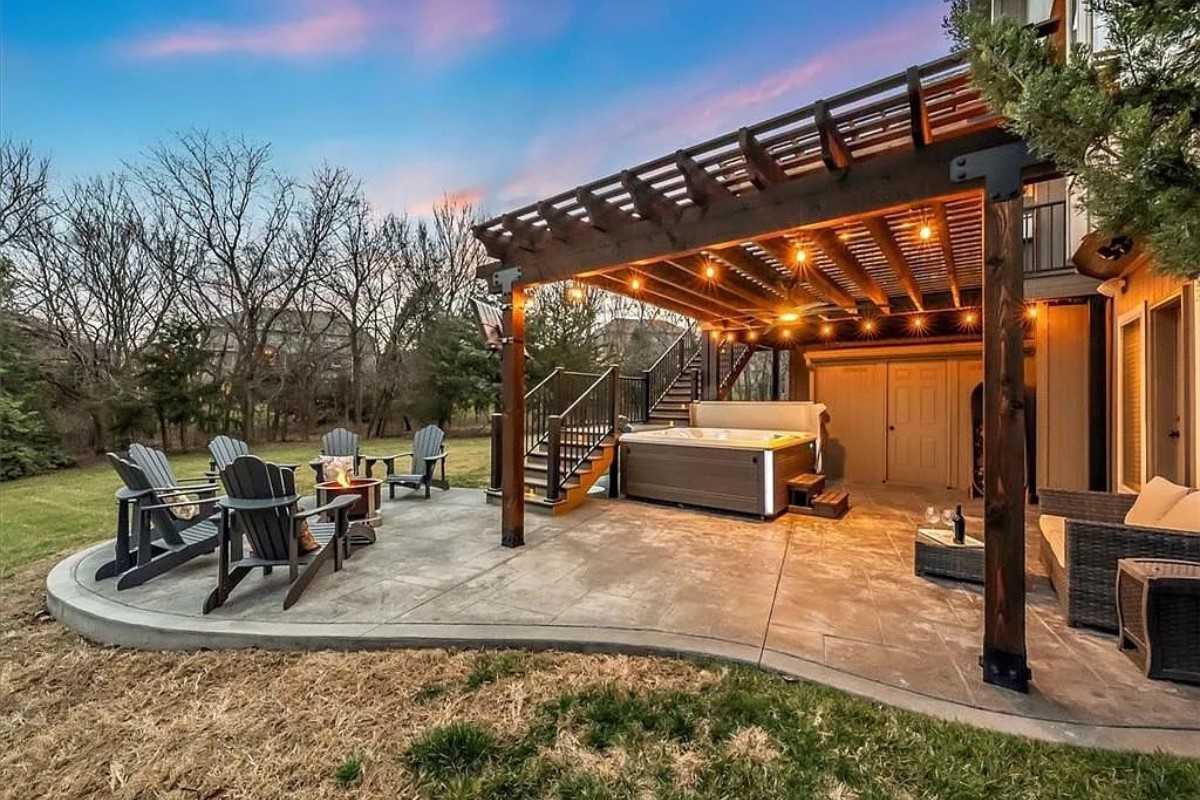
Covered deck and pergola with string lights at dusk, a hot tub beneath the deck, a stairway, and a fire pit on the patio

2. Design and Bid

You get one bid covering the structure and the electrical plan, with the line voltage scope from the licensed electrician spelled out so you can see it.

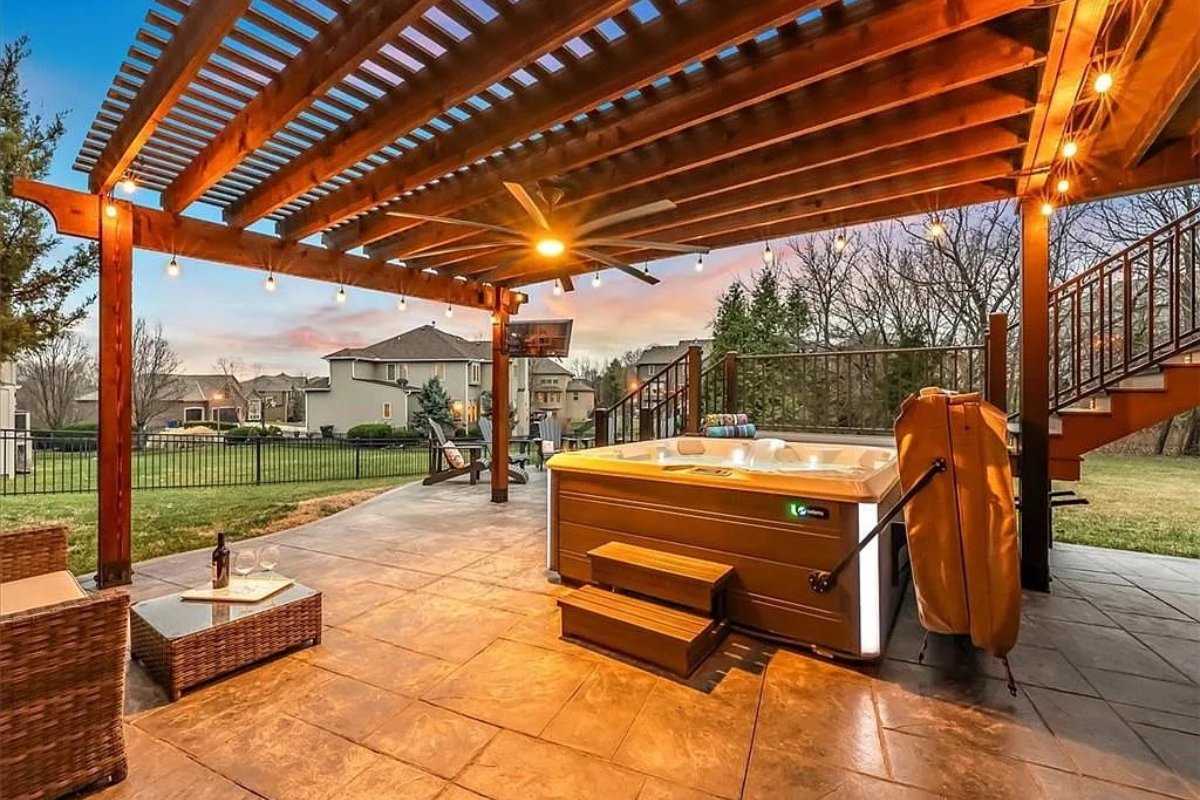
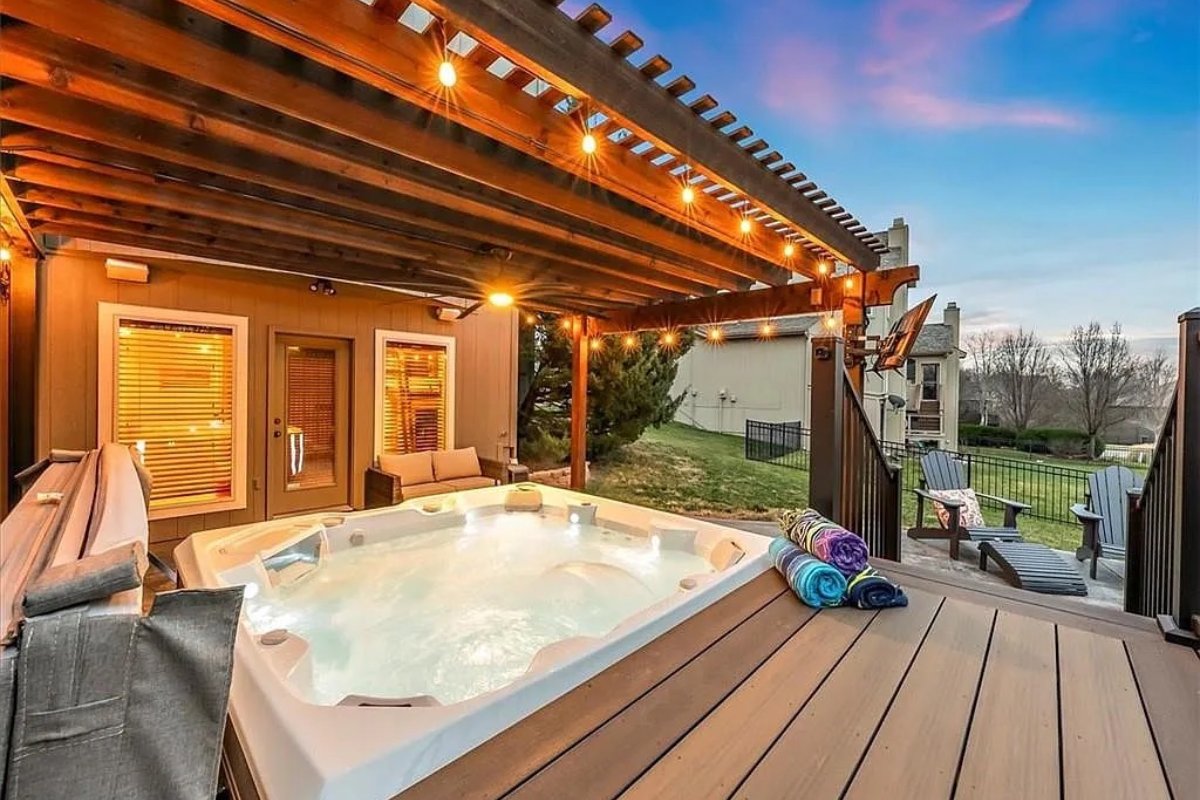
Hot Tub Electrical Hookup on a Deck

3. Permits and Approvals

We file the permit, allow time for any homeowners association review, and schedule the electrician around our framing.

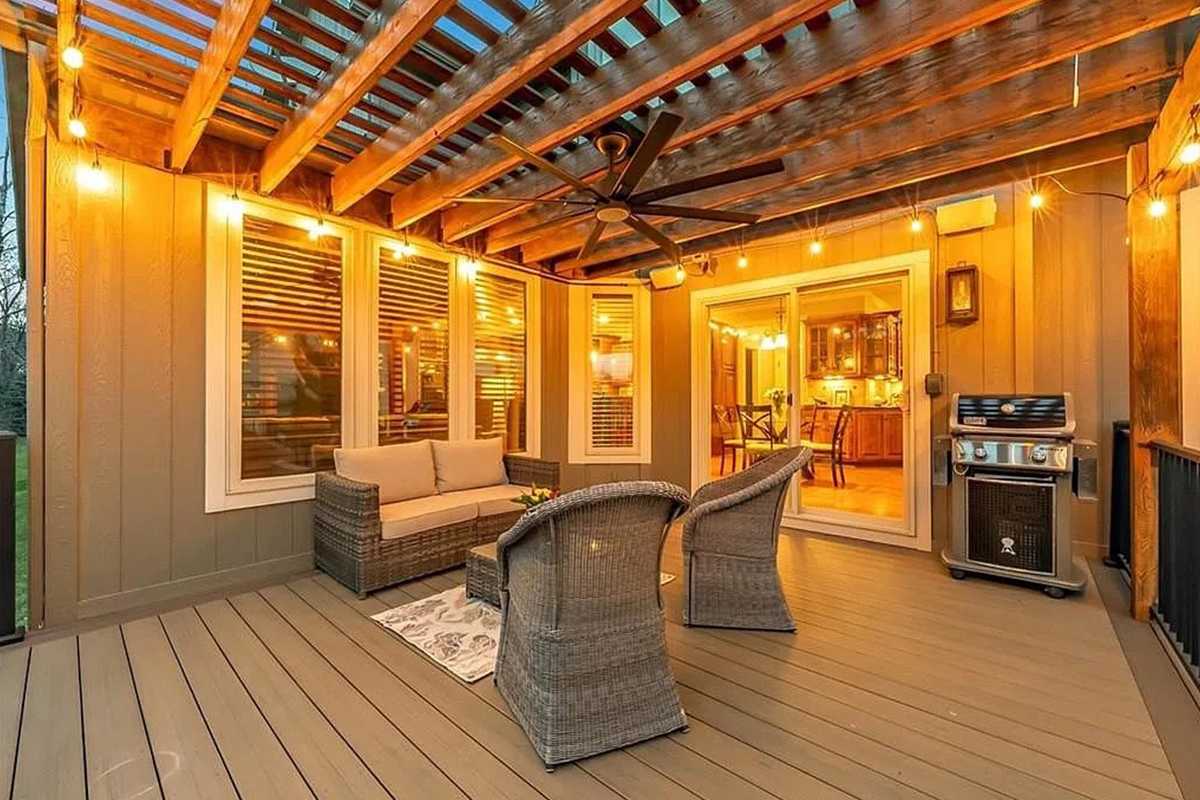
Covered porch with a ceiling fan, string lights, and wicker seating on a composite deck, with a gas grill beside the sliding door

4. Build, Rough-In and Inspect

Framing goes up, the electrician roughs in, and the electrical inspection passes before the ceiling or decking closes.

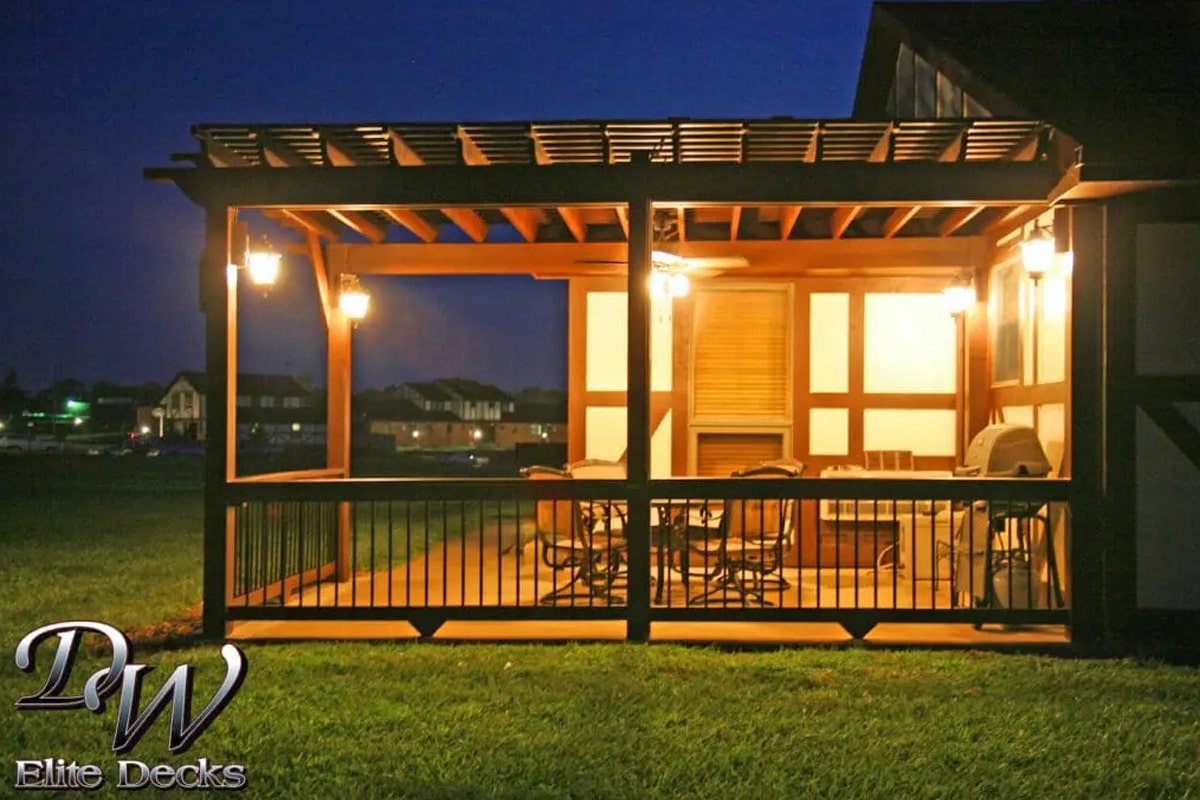
Covered deck with a pergola roof and lit lantern fixtures at night, with patio furniture inside and a grill on the right

5. Final Inspection and Walkthrough

After final inspection, we show you the switches, the spa disconnect, and how to test and reset the GFCI outlets.

Pairs Well With

Frequently Asked Questions

Do I need a permit to add an outdoor outlet in Leawood?

Yes. The city requires a permit to install, alter, or replace electrical wiring, and a new outlet counts. Only small items like plug-in decorative lights or a same-size breaker swap are exempt.

Is 240V considered high voltage?

Not by utility standards, which save the term for much higher voltages. Around the house, people call 120V and 240V high voltage to separate it from 12V lighting, and it needs a licensed electrician.

Does a hot tub need its own circuit?

Yes. Most tubs need a dedicated 240V circuit with GFCI protection and a disconnect within sight of the tub, at least 5 feet away. A few small units plug into a 120V GFCI outlet, so check the tub’s manual.

Can you put a hot tub on a deck?

Yes, when the framing under it is designed for the filled weight. We plan the structure and the electrical together so the support and the circuit are both ready before delivery.

Can I add a ceiling fan to my covered deck later?

Usually, but it costs more once the ceiling is finished. The box needs solid support, and the wire has to be fished in, so deciding during framing is the cheaper path.

Do outdoor outlets need GFCI protection?

Yes. Outdoor 15 and 20 amp, 125V outlets need GFCI protection, and so does any outlet within 20 feet of a hot tub. Outlets exposed to rain also need covers that seal while something is plugged in.

Does the electrician need a special license to work in Leawood?

Yes. Contractors doing electrical work in the city need an active Johnson County contractor license to get a city business license. The line voltage work on our projects is handled by licensed electricians.

Will my home's association need to review the project?

It depends on your association. Some have asked the city to send them plans for larger exterior projects, which adds a review window, so check your covenants early and we will build the time into the schedule.

Ready to Plan Your Outdoor Power?

Visit our Olathe showroom by appointment, look over our pricing, or call (913) 782-7575 to set up a site visit. We will find your panel, meter, and service line first, then design the deck, porch, or spa area around them. When you want the structure and the power planned as one project, DW Elite Decks is ready to handle your high-voltage electrical in Leawood.

OUR ACCOLADES

Award Symbol

Granted a Class A building license for operation in Johnson County, Kansas. This is the top license type for any contractor.

Award Symbol

Deckorators chose DW Elite Decks as its First Certified Pro Spotlight Feature.

Award Symbol

Awarded the coveted Angie's List Super Service Award (many times), which is only given to the top 5% of all Kansas City deck builders.

Award Symbol

Nationally recognized by Rich Noonan, the Eight Time Emmy Award-Winning Reporter for Fox News!

Award Symbol

Westbury Certified Master Pro. Beacon of distinction as the bar is set high to earn this coveted status.


Our Service Image

Ensuring Quality and Compliance

At DW Elite Decks, we pride ourselves on delivering craftsmanship that meets and exceeds industry standards. As Kansas City’s premier custom deck builder since 1997, we ensure every project is executed with proper permits and passes final inspections, guaranteeing code compliance and long-term safety.

Our Service Image

Accolades