
Most people who call us about a composite deck in Kansas City already have two or three bids sitting on the kitchen counter, and the spread between them is thousands of dollars. The boards on top are usually comparable. What separates those numbers is everything you will never see once the deck is finished: how deep the footings go, how the structure attaches to your house, and whether anyone bothered to pull a permit. That is what this page walks through, so you can read your bids properly before you sign one.
5.0 ⭐ rating with 240+ Google reviews, BBB A+ accredited since 2009, licensed Class A and residential contractor, Deckorators Certified Pro Spotlight builder, multi-year Angi Super Service and Best of Houzz award winner.
Kansas City sits in a mixed humid climate zone, and our lots are not uniform. These are the four things we look at on a walkthrough, because each one changes the design before we ever talk about board color:
None of this is an argument for composite over wood. We already make that case on our composite decks service page, and if you are still weighing materials, start there. The point here is narrower: these conditions dictate how the deck has to be built, and that is what the rest of this page covers.
If you have been comparing composite decking near you and every bid looks roughly the same, this is usually where the difference hides. These are real local requirements, and cutting them is how a cheap deck becomes an expensive problem.
Footings go 36 inches deep, minimum. That is what it takes to get below the frost line here. Pier diameter is then sized against the load each post carries.
Ledgers cannot be bolted to brick, stone, or masonry veneer. Veneer is not structural and will not carry the load, which catches a lot of people in Brookside, Waldo, and along Ward Parkway. The deck either gets an engineered connection or goes freestanding.
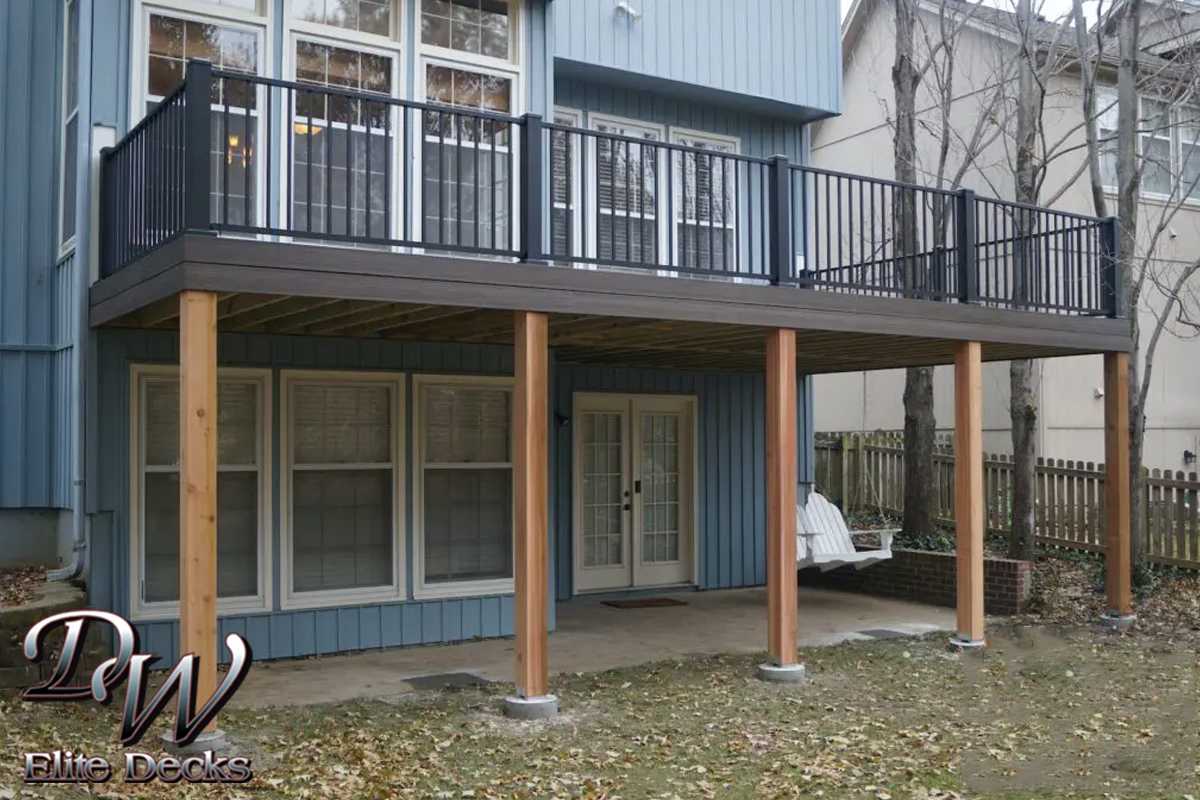
Guards are required over 30 inches above grade, at a minimum 36 inches tall. On a walkout lot where the kitchen door sits eight feet up, that drives much of the design.
Framing gets tighter for composite. Most boards span 16 inches on center instead of 24, and stair stringers tighten to 16 inches under composite treads. More lumber, more labor, not optional.
Permits and inspections are our job, not yours. Kansas City, Missouri runs residential deck permits through the CompassKC portal, and Johnson County cities follow a shared deck guideline. We pull the permits and meet the inspector on both sides of the state line. See our deck framing options for what goes underneath.
We are not going to re-run the brand comparison here. The full Deckorators lineup, the other brands we install, and how the material itself is built are all covered on our composite decks page and in the decking options breakdown.
What that comparison cannot tell you is which board suits your yard. That part is site-specific:
Bring the questions to the Olathe showroom and put your hands on the samples. Color reads completely differently in daylight than it does on a screen.
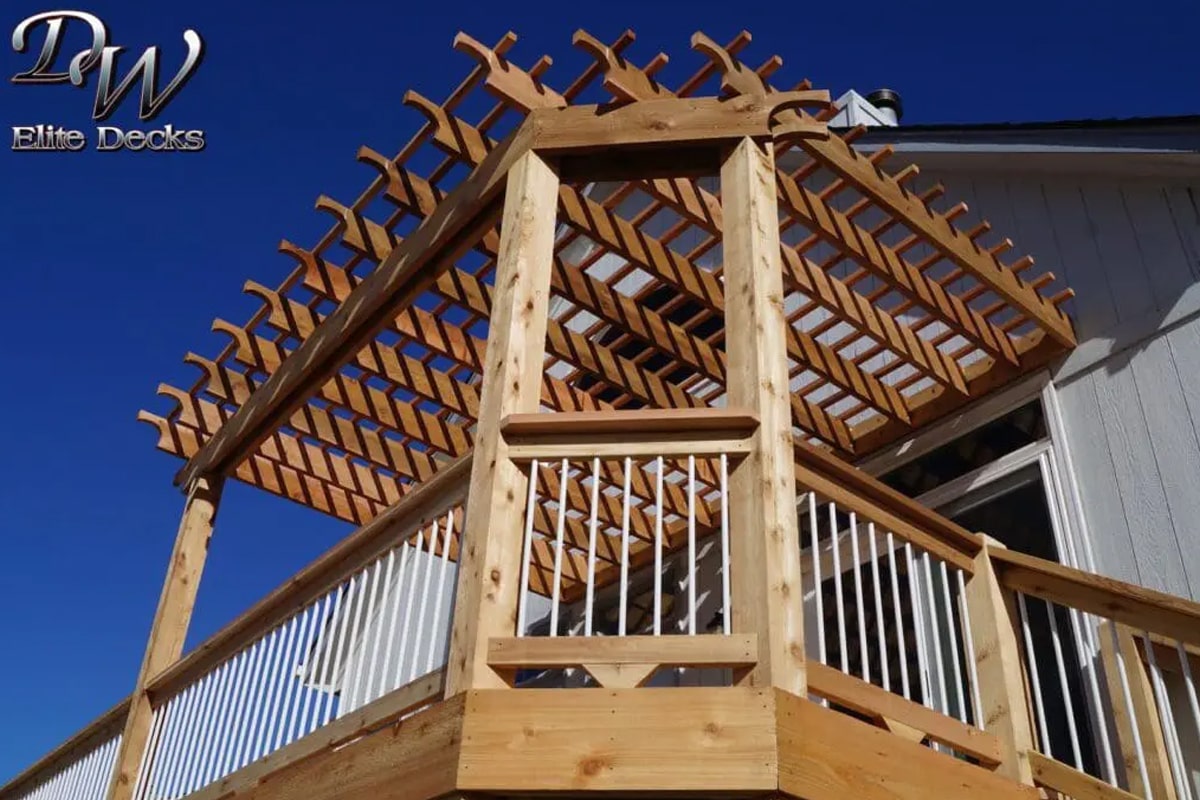
If barefoot comfort is your top priority, the honest fix is shade rather than a different board, which is where a pergola or a covered deck earns its keep.
Custom composite decking is where a deck stops looking like a builder-grade box:
Search “cost to build composite deck” and you will land on a calculator quoting around $8,000. Those numbers are for a flat, ground-level rectangle with builder-grade rail and no permit. That is not what most Kansas City lots ask for.
Our actual published ranges:
| Project | Starting | Typical range | Per sq ft |
|---|---|---|---|
| Custom composite deck | $20,000 | $25,000 – $40,000 | $100 – $160 |
| Covered composite deck | $35,000 | $40,000 – $55,000 | $160 – $220 |
| Screened porch | $45,000 | $55,000 – $80,000 | $220 – $320 |
That composite range assumes about 16 by 14 feet with one 4-foot staircase, sitting 2 to 8 feet above grade.
What moves your number up: height off the ground, stairs and multi-level layouts, curved or angled shapes, diagonal and herringbone board patterns, upgraded railing, lighting, tight site access, and any engineering the city asks for. Full breakdown on our pricing page.
We come out, measure, look at your grade, your siding, your door heights, and your access. Bring a Pinterest board or a napkin sketch; both work.
You get a scaled plan and an itemized quote, not a square-foot guess. We walk you through material and railing options with no pressure toward the expensive one.
We prepare the site plan and deck plan, submit them, and manage the review. Note that approved plans in Kansas City, Missouri expire after 180 days, so we time submittal against your build slot.
Footings, framing, decking, railing, then finish details. Your site gets cleaned every single day. Same crew start to finish, and you get updates as we go.
We meet the inspector, pass final, and then walk the deck with you before we call it done.
A deck is often step one. Homeowners in this market frequently add:
Serving Kansas City plus Leawood, Lenexa, Olathe, Overland Park, and Shawnee. Full list on our service areas page.
Yes. Kansas City, Missouri, requires a permit for residential decks, applied for through the CompassKC portal with electronic plans and a scaled site plan. We handle the entire submittal and inspection process for you.
Our composite decks start at $20,000, with most projects landing between $25,000 and $40,000, or roughly $100 to $160 per square foot. Height, stairs, railing choice, and site access are the biggest swing factors.
Piers need to go at least 36 inches deep to sit below the frost line. Diameter depends on how much deck load each post carries, and the top should sit an inch above grade and be sloped so water runs off.
Not directly to the brick. Veneer is not structural, so the ledger cannot be bolted to it or through it. We either engineer a proper connection to the framing or build the deck freestanding on its own posts.
Any deck surface in direct August sun will get warm. Lighter colors and mineral-based boards with a micro-embossed finish run noticeably cooler, and shade from a pergola or roof cover makes the biggest difference of all.
Winter and early spring are the quietest booking windows, and our crews build year-round rather than shutting down for the season. Starting the design and permit work in January or February usually means you are using the deck by the time the weather turns.
The boards we install carry 25-year structural and 25-year stain and fade warranties. With a properly built substructure and correct footings, the frame is designed to outlast that.
Sometimes, but only after we inspect the frame. Older Kansas City decks often have undersized footings, joists spaced too far apart for composite, or a ledger that was never flashed correctly, and putting new boards on a failing structure wastes your money.
Come see the boards in person at our Olathe showroom, or send us your address and we will come to you. No pressure, no upsell, just a straight answer about what your yard needs and what it will cost. When you are ready to build a composite deck in Kansas City that still looks right in 20 years, request your free bid or call (913) 782-7575.

Granted a Class A building license for operation in Johnson County, Kansas. This is the top license type for any contractor.

Deckorators chose DW Elite Decks as its First Certified Pro Spotlight Feature.

Awarded the coveted Angie's List Super Service Award (many times), which is only given to the top 5% of all Kansas City deck builders.

Nationally recognized by Rich Noonan, the Eight Time Emmy Award-Winning Reporter for Fox News!

Westbury Certified Master Pro. Beacon of distinction as the bar is set high to earn this coveted status.

At DW Elite Decks, we pride ourselves on delivering craftsmanship that meets and exceeds industry standards. As Kansas City’s premier custom deck builder since 1997, we ensure every project is executed with proper permits and passes final inspections, guaranteeing code compliance and long-term safety.