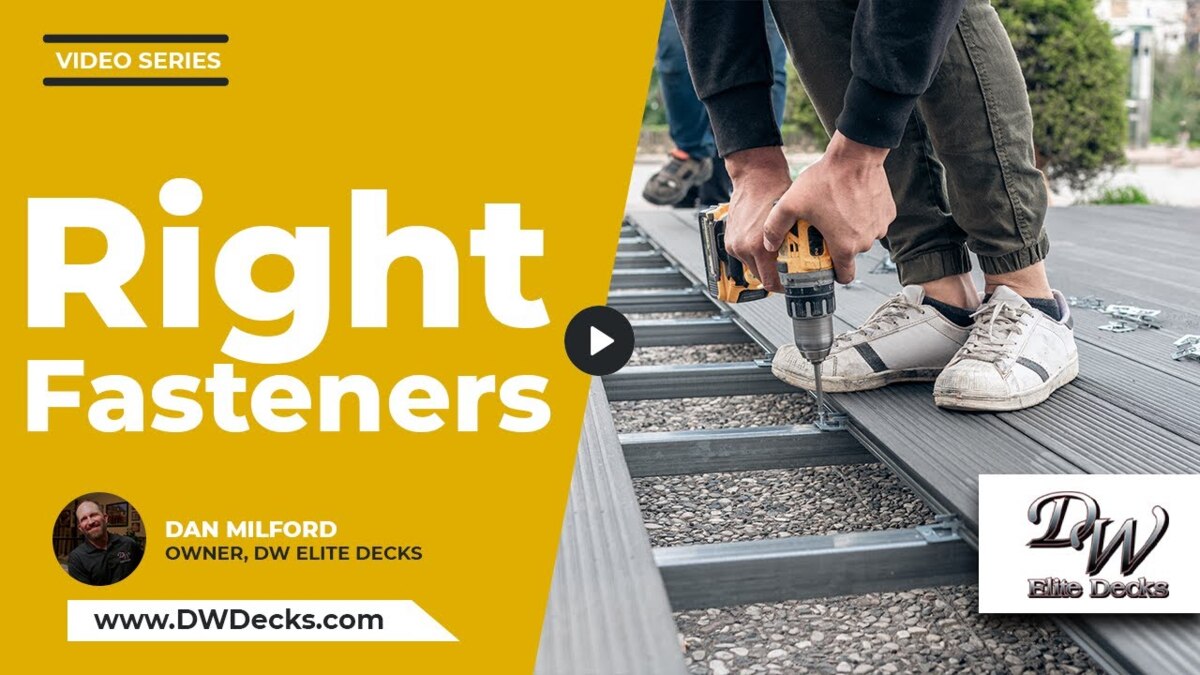




Manufacturer guidelines for decks are not optional. They are the exact installation rules for which the product was tested for IRC compliance. When a builder skips fasteners, changes bracket details, or “does it their way,” the system can fall outside its approved performance, even if the deck still passes a basic inspection.
We follow the current manufacturer’s manual and required fastener schedules so the deck performs the way it was evaluated to perform.
Why Manufacturer Guidelines for Decks Matter for Code Approval
Guidelines Match the Way the Product Was Tested
Manufacturer guidelines keep decks safe because that is how the systems were tested and approved to pass the IRC code. To pass the IRC code, products have documentation such as an ICCE report or an ESR report that shows they meet the IRC guidelines when installed as tested.
When we follow the instructions, we install the system the way the manufacturer tested it. When a builder changes the method, uses fewer fasteners, or skips steps, the installation can fall outside what the product was approved for.
Deviating from the Installation Method Can Put Compliance at Risk
The point is simple. The manufacturer’s instructions are not suggestions. They are the conditions tied to the testing and approval. If the product requires a specific fastener pattern, bracket layout, or attachment method, that requirement exists because the system was evaluated that way.
Key Takeaway: If you change the method, you change the performance. That is why compliance depends on following the tested instructions.
Where Failures Happen When Fasteners Get Skipped
Hidden Brackets Can Hide Missing Screws
A common example is a railing system that requires two screws at the top and bottom brackets. Many railing brackets have a cover that hides the fasteners from view. If a builder installs one screw instead of two and then snaps the cover on, the missing fastener is hard to spot.
Inspectors are not going to remove covers and pull apart every component to verify every screw. A city can sign off on a deck and still miss a concealed shortcut.
Real-World Consequence: A Rail Fails, and Someone Gets Hurt
This is where the risk becomes serious. If that railing fails and someone falls, the negligence falls back on the builder who knowingly installed the system incorrectly.
Pro Tip: If a component has a cover plate, do not treat it like a shortcut opportunity. Follow the full fastener schedule every time.
Need expert help with manufacturer guidelines for decks? Contact DW Decks for a free consultation.
Liability Does Not Disappear After an Inspection
The Builder Remains Responsible for Negligent Work
Even if the city signs off, liability can still fall back on the builder if they installed the product in a knowingly wrong way. The deck may pass inspection, but a failure can expose what was covered up.
An Implied Warranty Keeps Accountability in Place
In Kansas and Missouri, implied warranty matters. If a builder does something deviant or knowingly wrong, the builder remains responsible. That is one reason we treat manufacturer instructions as part of the safety system.
Key Takeaway: An inspection is not a shield for shortcuts. The responsibility follows the work.
How We Stay Current on Manufacturer Standards
We Check the Manufacturer Website for the Latest Manuals
Manufacturer standards can change when codes change. The best way to stay current is to check the manufacturer’s website for updated instruction manuals, videos, and published guidelines. We do not rely on memory or old PDFs saved from years ago.
We Confirm the Guidance Matches the Current Code Requirements
If the code changes, manufacturers update their manuals to match the new compliance requirements. For example, if guardrail requirements change, the manufacturer will publish a new guideline manual on their website. We check that manual and make sure we are working from the current version.
Pro tip: Ask your builder where they pulled the current manual from and how they confirm it is up to date.
What this Means for Your Project
You Want a Builder Who Installs Systems Exactly as Approved
If the railing, connectors, and components were tested under specific installation rules, you want them installed under those same rules. That is how you reduce hidden weak points and get performance you can trust.
We Build with Tested Methods So Your Deck Holds up
We build decks by following the installation rules under which the products were tested, and we stay current by checking manufacturer updates. If you want a deck built with the methods that support safety and compliance, call DW Decks and schedule a quote for your deck needs.